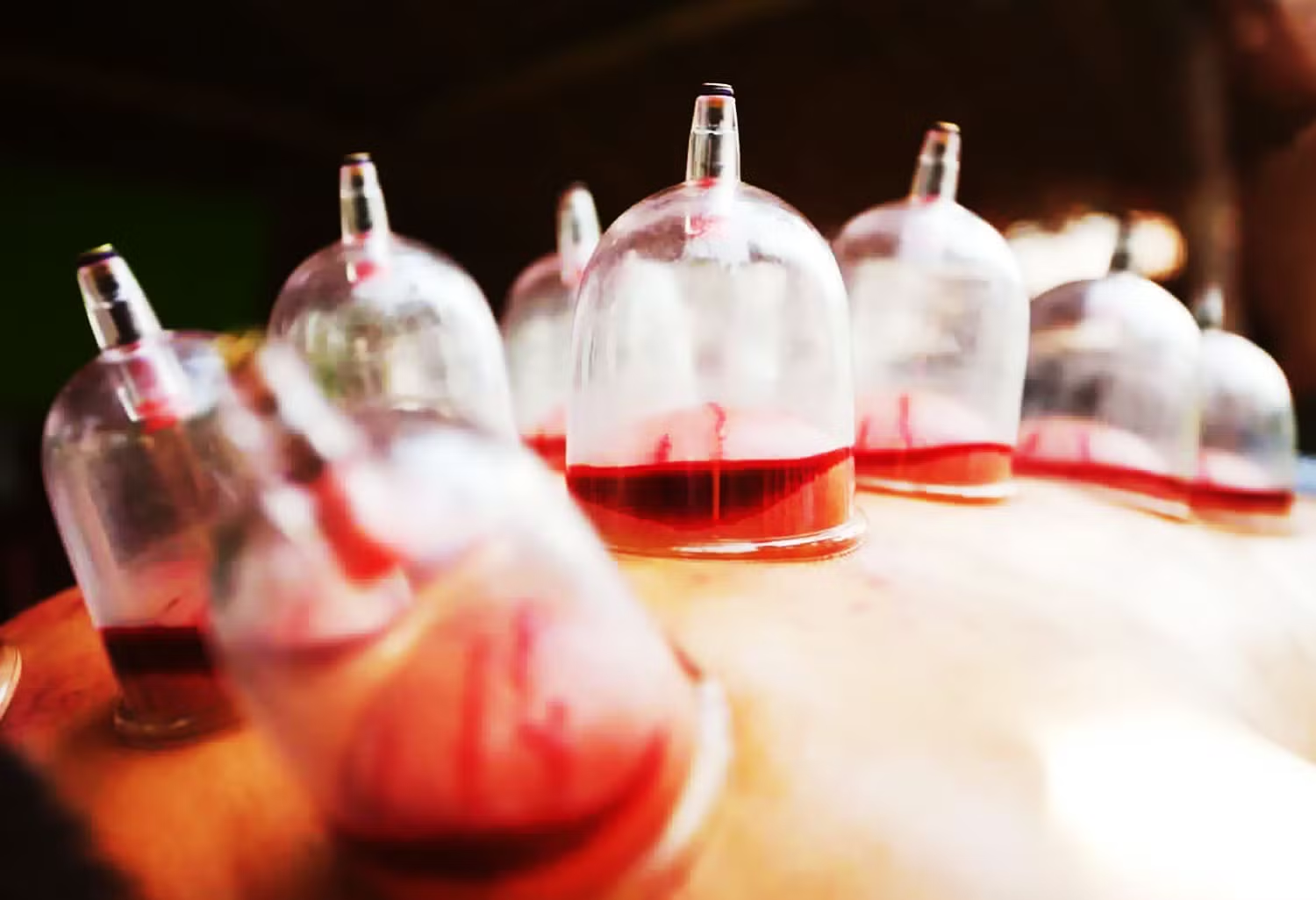
A pilot study conducted at King Abdulaziz University Hospital, Saudi Arabia, states that wet cupping (hijamah) helps some women with infertility to achieve pregnancy.
The research was led by Hassan Abduljabbar and a team from the Department of Obstetrics and Gynecology, Faculty of Medicine, King Abdulaziz University.
The team examined the effectiveness of hijamah as a complementary therapy for women with female factor infertility.
Infertility itself is defined as the failure to become pregnant after one year of regular sexual intercourse without contraception and affects about 10–15 percent of couples of reproductive age.
So far, complementary therapies such as acupuncture have been studied earlier in the context of infertility.
Several studies show that acupuncture can increase pregnancy rates from 26.3 percent to 42.5 percent if performed before and after in vitro fertilization (IVF) procedures.
Nevertheless, the use of hijamah for the treatment of female infertility has not been widely studied.
Involving 59 Patients
This prospective study was conducted from September 2013 to August 2015 at a Prophetic Medicine clinic in Saudi Arabia.
A total of 59 women aged 20–50 years with female factor infertility were recruited in this study.
Of that number:
- 52.5 percent experienced primary infertility
- 47.5 percent experienced secondary infertility
The duration of infertility ranged from 1 to 22 years (average 5.87 years)
Before undergoing hijamah, most patients had tried other therapies, including:
- Ovulation induction (76.3%)
- Intrauterine insemination (32.2%)
- Laparoscopy for endometriosis (8.5%)
- In Vitro Fertilization/IVF (33.9%)
Hijamah was performed at 13 body points, including the back of the head, the kidney angle area, the lower legs, and the dorsum of the feet.
The therapy was carried out on the second day of menstruation and repeated every month if pregnancy had not yet occurred.
Results: 20.3 Percent Pregnant
The study results show that 12 out of 59 women (20.3 percent) successfully became pregnant after undergoing hijamah.
Of that number, seven patients only underwent one to two therapy sessions, while one patient underwent up to seven sessions.
In addition to pregnancy rates, the researchers also observed changes in reproductive hormone profiles.
A significant decrease was found in LH hormone levels (p < 0.05) and FSH (p < 0.001) after therapy.
However, changes in TSH and prolactin were not statistically significant.
In their discussion, the researchers linked the possible mechanism of action of hijamah with principles similar to acupuncture.
Namely the effect on the hypothalamic pituitary ovarian axis as well as possible direct effects on the uterus.
Several previous studies show that complementary therapies such as acupuncture can increase ovulation in women with polycystic ovary syndrome (PCOS), even from 15 percent to 66 percent within three months.
Although the results are considered promising, the researchers emphasized that this study is still a pilot with a limited sample size.
Further research with a larger design and control group is needed to ensure the effectiveness of hijamah in the treatment of infertility.
In the international report, this study did not receive external funding and has obtained approval from the Institutional Ethics Committee.
The researchers also emphasized that there is no conflict of interest in this surprising study.
Journal Link: International Journal of Reproduction, Contraception, Obstetrics and Gynecology